
- Client Login
- Client Register
- Mob-03001200324 -03091412444 (w)
- E-mail Us
Shared Hosting vs Cl...
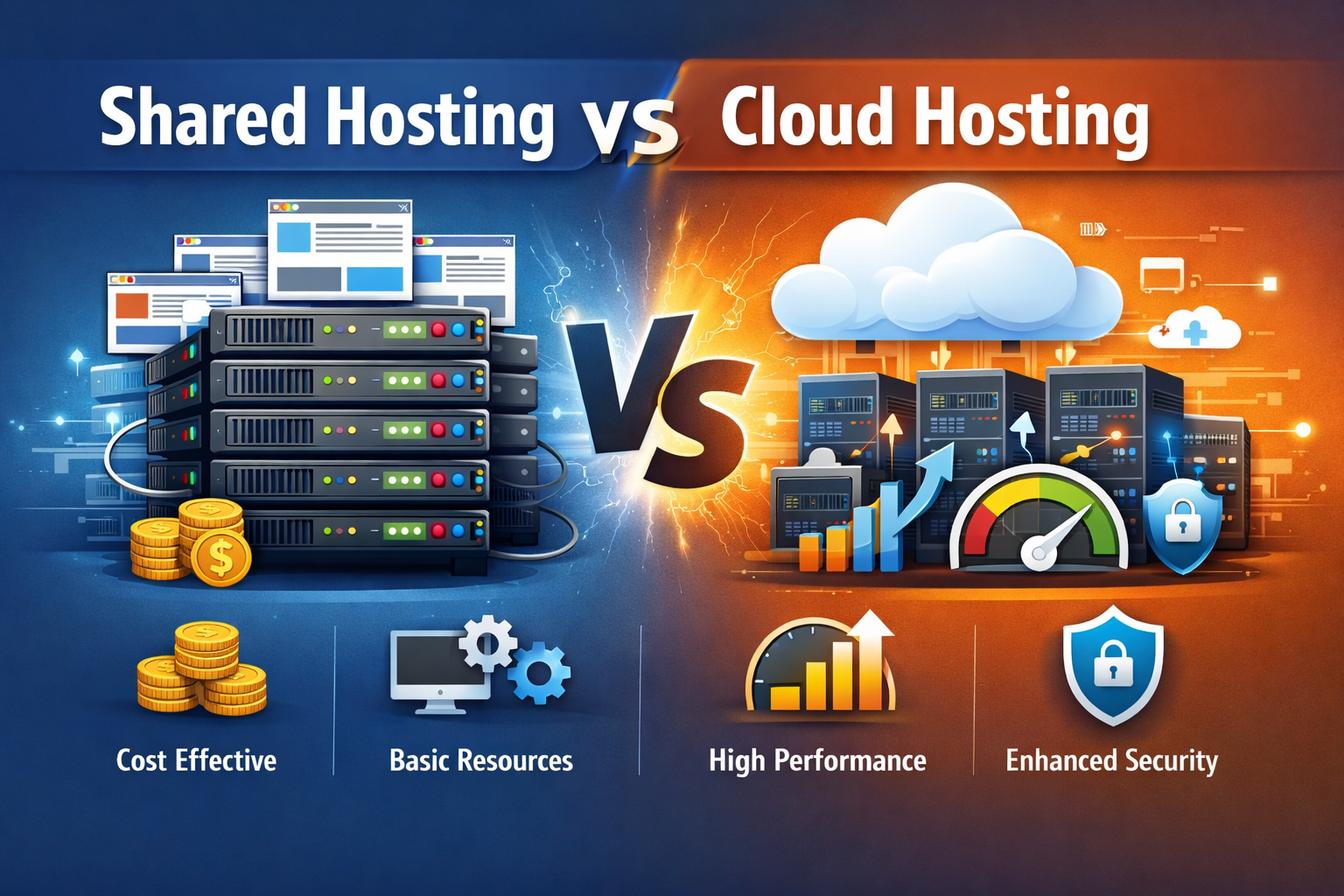
Shared Hosting vs Cloud Hosting – Full Comparison 2026
Shared Hosting vs Cloud Hosting – Full Comparison
Choosing the right hosting for your website is crucial for performance, security, and scalability. Two of the most popular options today are Shared Hosting and Cloud Hosting. In this guide, we will provide a complete comparison to help you decide which hosting solution fits your needs best.
What is Shared Hosting?
Shared Hosting is the most common type of web hosting where multiple websites share the same server resources, including CPU, RAM, and storage.
Key Features of Shared Hosting
- Cost-Effective: Shared hosting is affordable, making it ideal for beginners and small websites.
- Ease of Use: Most shared hosting providers offer cPanel or similar dashboards to manage your website.
- Limited Resources: Since server resources are shared, high traffic on one site can affect others on the same server.
Use Case: Shared hosting is best for personal blogs, small business websites, or anyone starting online with minimal traffic expectations.
What is Cloud Hosting?
Cloud Hosting uses a network of interconnected servers to host websites, distributing resources across multiple machines instead of a single server.
Key Features of Cloud Hosting
- Scalability: Cloud hosting allows you to increase or decrease resources based on your website’s needs.
- High Performance: Since resources come from multiple servers, websites experience faster loading times and better uptime.
- Security: Cloud hosting provides enhanced security features, including redundancy and DDoS protection.
Use Case: Cloud hosting is ideal for e-commerce websites, growing businesses, and high-traffic platforms that require reliability and flexibility.
Shared vs Cloud Hosting: Head-to-Head Comparison
When choosing between Shared vs Cloud Hosting, it’s essential to understand the differences in key aspects:
1. Performance
- Shared Hosting: Performance may suffer if other websites on the server consume excessive resources.
- Cloud Hosting: Offers better performance as resources are dynamically allocated, ensuring your site remains fast even during traffic spikes.
2. Uptime and Reliability
- Shared Hosting: Downtime on the server can affect all websites hosted there.
- Cloud Hosting: High reliability due to multiple servers. If one server fails, another takes over, minimizing downtime.
3. Cost
- Shared Hosting: Affordable with fixed monthly fees, making it suitable for startups.
- Cloud Hosting: More expensive due to advanced features but provides value with scalable resources.
4. Security
- Shared Hosting: Security risks are higher because multiple websites share the same server.
- Cloud Hosting: Better security with isolated environments, regular backups, and redundancy.
5. Flexibility and Scalability
- Shared Hosting: Limited scalability; upgrading usually requires moving to VPS or cloud hosting.
- Cloud Hosting: Highly scalable; resources can be adjusted instantly according to traffic or usage needs.
-
When choosing the right hosting for your website, understanding Shared Hosting vs Cloud Hosting is crucial. Shared hosting is cost-effective and beginner-friendly, where multiple websites share server resources. It’s ideal for small websites or personal blogs. On the other hand, cloud hosting provides scalability, high performance, and enhanced security by using multiple interconnected servers. Growing businesses, e-commerce sites, and high-traffic platforms benefit from cloud hosting’s reliability and flexibility. Comparing Shared Hosting vs Cloud Hosting helps website owners decide based on budget, traffic, and resource needs, ensuring optimal performance and long-term growth for their online presence.
Conclusion: Which One Should You Choose?
Both hosting types have their advantages, but the choice depends on your website requirements.
- Choose Shared Hosting if you are just starting out, have a limited budget, or run a small website with moderate traffic.
- Opt for Cloud Hosting if you need scalability, high performance, and robust security for growing websites or online businesses.
Ultimately, understanding the difference between Shared vs Cloud Hosting helps you make an informed decision, ensuring your website remains fast, secure, and reliable as it grows.